When temperatures fluctuate between warm spells and freezes, the blooming flowers of fruit are caught in the middle of an inconsistent spring.
At Russell Apple Farms in Appleton, New York, the goal is a prolonged April of colder temperatures, slowing down the speed at which trees push out green tips — the early step of tree growth.
“Once green tip hits, you have to start protecting the apples against fungal pressure,” said Max Russell, one of the family owners and operators of the fruit, vegetable and crop operation.
Early warm temperatures across their 350 acres of apples have historically led to blight reaching store shelves. In 2021, green tip arrived in late February, only to face cold damage when frost returned in late spring. Average green tip season in mid to late April, depending on variety.
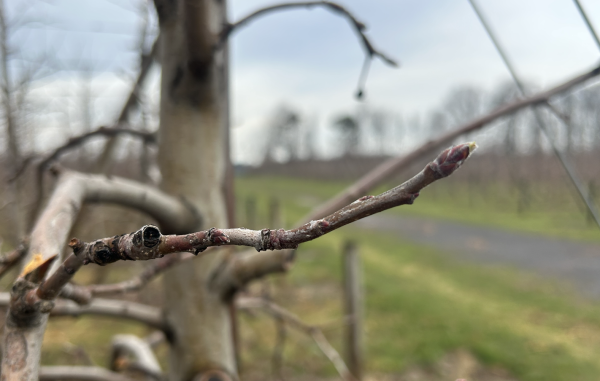
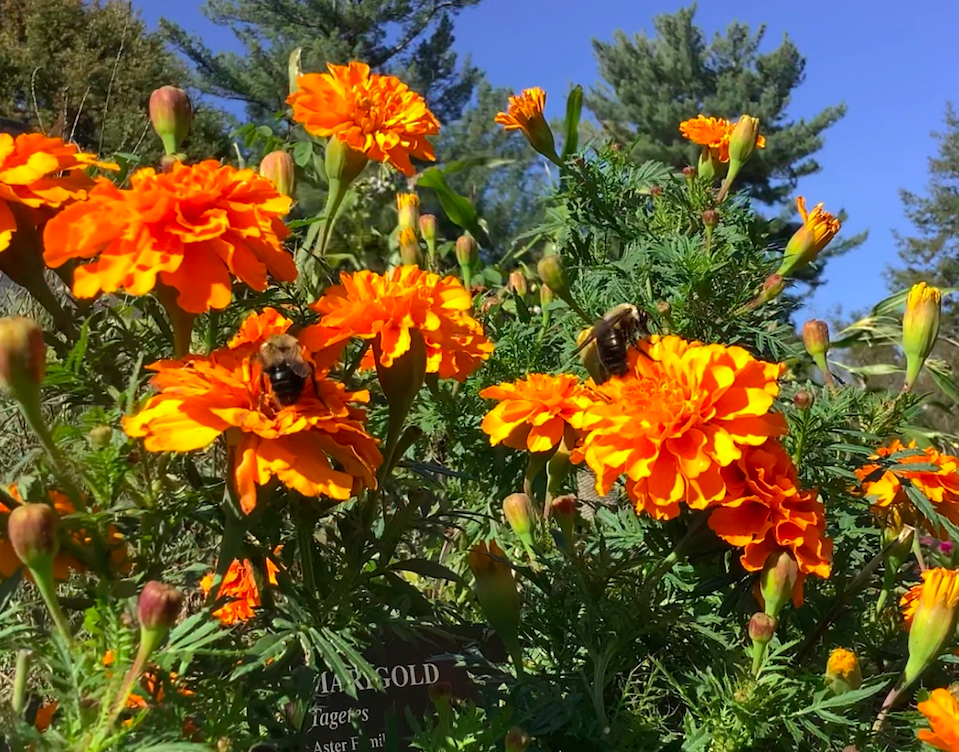
This year in early May, his apple buds are at the pink stage, getting pretty close to bloom. But a relatively cool start to the month slows honeybee activity getting flowers pollinated.
But, what is faced in previous seasons influences a tree crop’s response the next season, in a phenomenon called return bloom.
“If they’re stressed in the previous springs like spring, summer or fall, the trees are getting mixed signals, and if they’re not healthy going into the winter, they’re probably not going to put on the right fortifications for future buds,” he said.
Drought conditions from last year are top of mind in the current 2026 growing season.
“[Drought conditions] hurt fruit size quite a bit, ” Russell said. “If we would have had better size, I think we would have had a bumper crop, but the lack of size held, held top end, yields back a little bit.”
Located in Wayne County, the largest apple-growing county in New York, a superior apple harvest can achieve 2,000-plus bushels per acre, but the team aims for between 1,000 and 1,200 bushels per acre.
The apple crop is perennial, returning year after year with the right conditions and management. Russell has a team of workers in the fields pruning excess growth, giving way for flowers to bloom and apples to grow.
Across their acreage on Lake Ontario, three varieties make up more than 60 percent of production and management time — Gala, Honeycrisp, and Empire varieties.
Growing for New York
New York apples have an iconic sentiment around the country, but the majority of the crop produced stays right in-state.
“As early as eight years ago our farm used to ship a lot of apples through a packer that were exported to the United Kingdom,” Russell said.
Empire apples were a premium export product with good returns. Over the years, non-tariff trade barriers and changing economics in the apple business halted exports, and there was no longer a premium price proposition.
According to U.S. Apple, nationwide exports have declined 25% since 2018. “There’s a little bit of export in New York, but not a ton,” Russell said.
One key step that might change that is renewing the United States-Mexico-Canada Agreement and securing fresh produce exemptions in the trade deal. A Farm Credit East Apple Outlook report indicated that in 2025 the U.S. exported more than 16 million bushels worth $385 million dollars to Mexico and eight million bushels worth $165 million dollars to Canada — accounting for more than 50% of total U.S. fresh apple exports.
Russell’s mainline varieties, including Honeycrisp, Gala, Fuji, Empire and Red Delicious, are shipped wholesale to grocery retailers like Tops, Wegmans and Walmart.
The farm targets fresh wholesale production on everything from their apples to cabbage and tomatoes.
“We’ll harvest the bins, take them over to our cold storage, then we work with probably four to maybe five different apple packing operations, and their associated sales desks for distribution,” Russell said.
Harvest starts at the end of August and goes through the first week of November. While their operation is focused on fresh production, the Mott’s plant in Williamson for juice processing “set a bit of a price floor on a lot of stuff in the fall,” Russell said.
With cold storage, the ability to get New York apples year-round is increasing. Their cold storage period is roughly six months, with most New York apples being shipped between the fall harvest and May or June.
With a oversupplied market in Washington state, New York apple shippers are feeling the need to match market energy by supplying and storing for 12 months. “There is a big push right now for people to start going 12 months out of the year,” Russell said.
Lake Growing
“Most of our apples are to the north as you get closer to Lake Ontario,” Russell said. “So that’s the best fruit ground in the town or in the county, the sites right along the lakeshore.”
Closer to the lake, soils are deeper, better drained, and benefit from a moderating temperature effect from the water. But as you move further from the lake, the tree’s growing season changes.
“Ginger golds will bloom down here [farm’s headquarters] a full five to six days earlier than the ginger golds that are a mile and a half or two miles down the road,” Russell said.
It works to their advantage, spreading out labor needs across different harvest windows.
“Our climate is probably best suited for apples,” Russell said. “It’s an asset to premier fruit growing, despite the unpredictable weather that might come with it.”