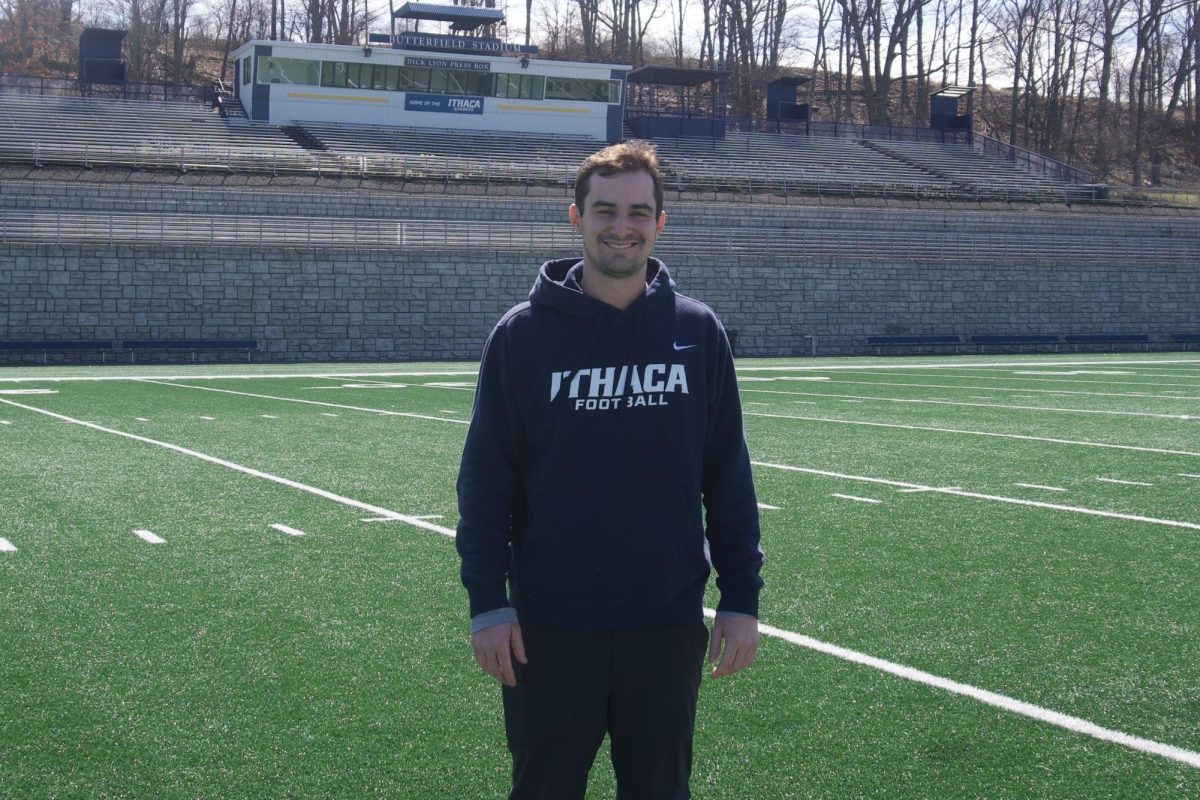

Ithaca senior Marshall Long has firsthand experience working with the athletic department as a part of the club softball’s leadership team.
Basic needs for the team, like equipment, are largely left to the teams to manage. Uniforms are provided by the school, but other equipment — like helmets and catching gear — is not provided or is inadequate, students say.
“Most people have their own gear, and when they don’t, most people have extras on the team that we just lend to each other,” said Long.

At Ithaca College, students say club sports help them build lasting friendships and stay active. However, for some students, small budgets, constrained facility access and inconsistent communication from the athletic department hurt their experience as club athletes.
Scheduling woes
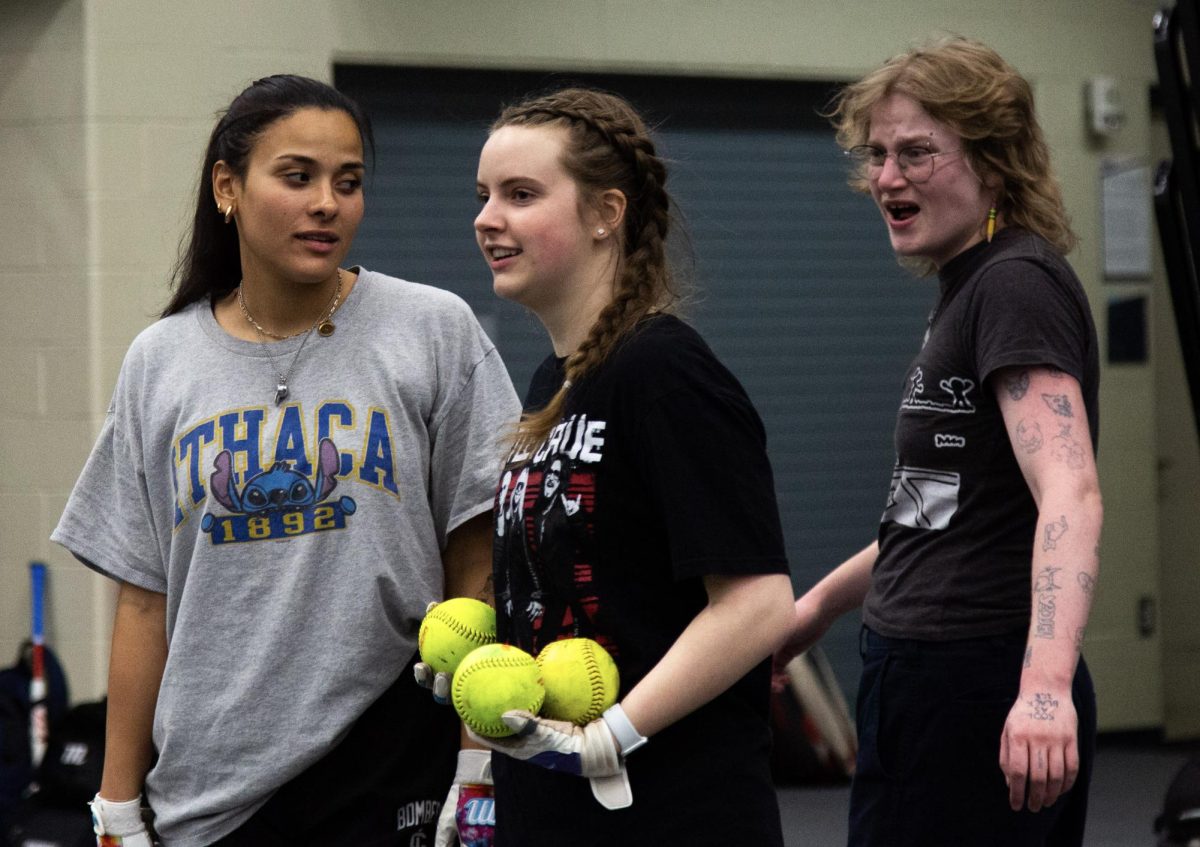
Club softball has also had difficulty scheduling practice times, club athletes say. The team practices indoors at the Athletics and Events Center during cold weather, and practice times must be scheduled around varsity sports like baseball and men’s and women’s track and field.
While the team used to start practices around 7 p.m., Long said, the team has been pushed to later practice times.
“This semester, it’s 9:30 to 10:45 — we’re there when they turn the lights off,” Long said.
It’s an issue becoming more prevalent, members say. Club teams at the college have felt a loss of funding amid Ithaca College’s budget restructuring and inadequate communication from athletic department leadership.
Long said the rescheduling has decreased the team’s enrollment, with the late hours discouraging members from joining or staying active on the team.
“It’s inconvenient, and it kind of feels like a slap in the face,” Long said.
Like the club softball team, the college’s club volleyball team has to schedule around other club and varsity sports that use the Ben Light Gymnasium.
Varsity sports have scheduling priority for the gymnasium, forcing club sports into slots later in the evening. Club volleyball practices from 8–10 p.m. on Monday and Wednesday.
During practices, the team has to manage practicing at the same time as the men’s and women’s club basketball teams, which are separated from the club volleyball team by a single divider.
Caitlyn Argo, a former president of the club volleyball team, said she understands the complexity of scheduling practice times, but that sharing the facility with two other teams can be distracting for players.
While she said that she made an effort to work with the time given, a lack of communication from campus recreation staff made her role challenging.
“I’ve just been having to reach out to people who I typically shouldn’t have to just get really simple answers,” Argo said.
Lack of autonomy
Club sports are not able to view their funds on their own, meaning they must request information through the campus recreation staff. Argo said the team has had trouble getting timely responses to funding requests — in one instance, the team could not afford dinner after a tournament because of a lack of communication.
“Last month we went to a tournament, and we didn’t know about this new rule about letting them know [when they needed the card]. So we had asked, ‘Oh, can we get food?’ and they were like, ‘not this time,’” Argo said.
According to Argo, the staff failed to inform the club team that there are only two travel credit cards used at a time. Unable to use their existing budget, individual team members purchased their own dinner, a decision Argo said was frustrating.
“I think you need a director who is willing to actually connect to the students and really talk to them, and be willing to really give their whole thing to the job,” Argo said.
“I shouldn’t have to be teaching someone how to do their job as a student,” Argo added.
Lack of response
Aaron Bouyea, director of Intercollegiate Athletics and Campus Recreation, oversees both varsity and club sports at the college.
Bouyea, who joined the college in July 2025 after time as an athletic director at Monroe Community College, said he welcomes conversations with students about funding and scheduling for club sports.
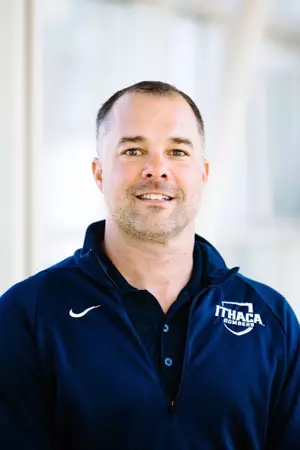
“Sarah Smith’s a great contact, and my door is always open,” Bouyea said. “If we do have club sport athletes or teams that want to meet, I’m more than happy to do that.”
That has not been the student athletes’ experience, however. They say they have reached out and received no response.
Sarah Smith did not respond to repeated requests for comment on this story.
Bouyea addressed scheduling concerns, saying that class time constraints mean that practice times are limited, with a narrow window starting around 4 p.m.
Although it may look as if the campus has plenty of space to accommodate all of the clubs and teams, that may not be the case, Bouyea said.
“There are a lot of competing priorities,” he added.
Student-led
Bouyea said club sports are designed to put more responsibility in students’ hands.
“We want to be able to give them the tools they need to be successful, but also give them an opportunity to learn and lead and run a program,” Bouyea said. “Because that’s really the foundation of club sports.”
The club swim team, which is fully student-directed, has not had major issues like the club softball and volleyball teams, according to members.
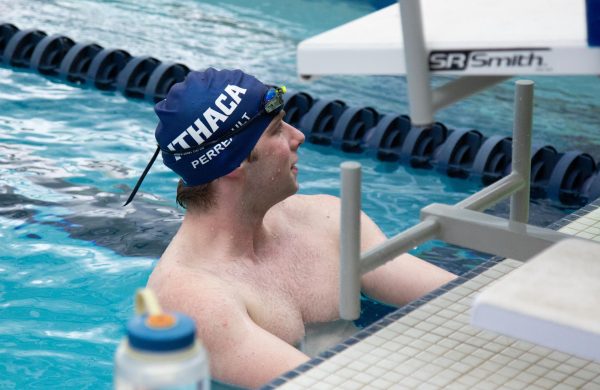
The club swim team shares the Kelsey Patridge Bird Natatorium with the varsity men’s and women’s teams, but unlike varsity teams, they do not have a staff coach.
The president of the club, Mia Wong, said the club’s Executive Board runs practices and develops workouts, drawing on resources left by past team members.
This student-directed setup is a major draw for sophomore Shira Sawyer. Sawyer, a former member of the varsity track team, joined the club swim team for a structured way to stay active, without the intensity of a varsity sport.
“You can take the set as you can make it as hard as you want. You can really follow it,” Sawyer said. “You can really get a good workout out of it.”
Sophomore Jack Perrault is the swim club vice president. He said this freedom allows members to take workouts at their own pace.
“There’s no pressure to, ‘oh, you have to be this good’ or something like that,” Perrault said.
More than exist
Across the club teams, students said the chance to be active and be part of a team has improved their college experience.
Argo said she appreciates the relationships she has built on the club volleyball team.
“I was able to build friendships within that and get in touch with people I would have never known if I hadn’t started the sport.” Argo said.
The club softball team allowed Long to form meaningful friendships with his teammates, he said, adding the college should do more — and want — to support club sports.
“I love this team, I love my teammates, and it is a family in a way,” Long said.
“It’s a community worth protecting, and I think it is Ithaca College’s responsibility to at least provide us with the things and resources we need to not just exist but actually function,” he added.