
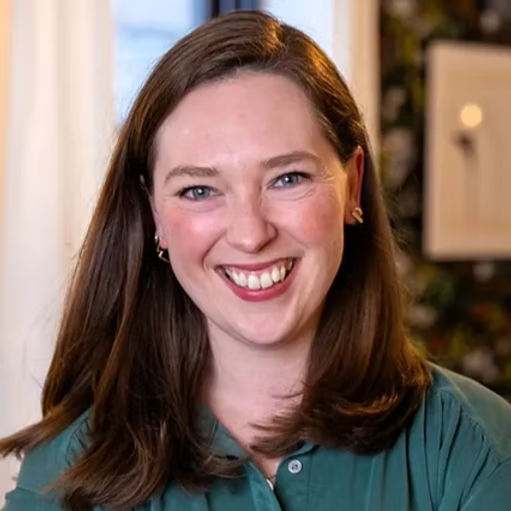
Operating under the motto, “Important Conversations Happen In the Kitchen,” the Kitchen Theatre Company stages productions that spark thought-provoking, meaningful dialogue, said Communications Director Rebecca Miller
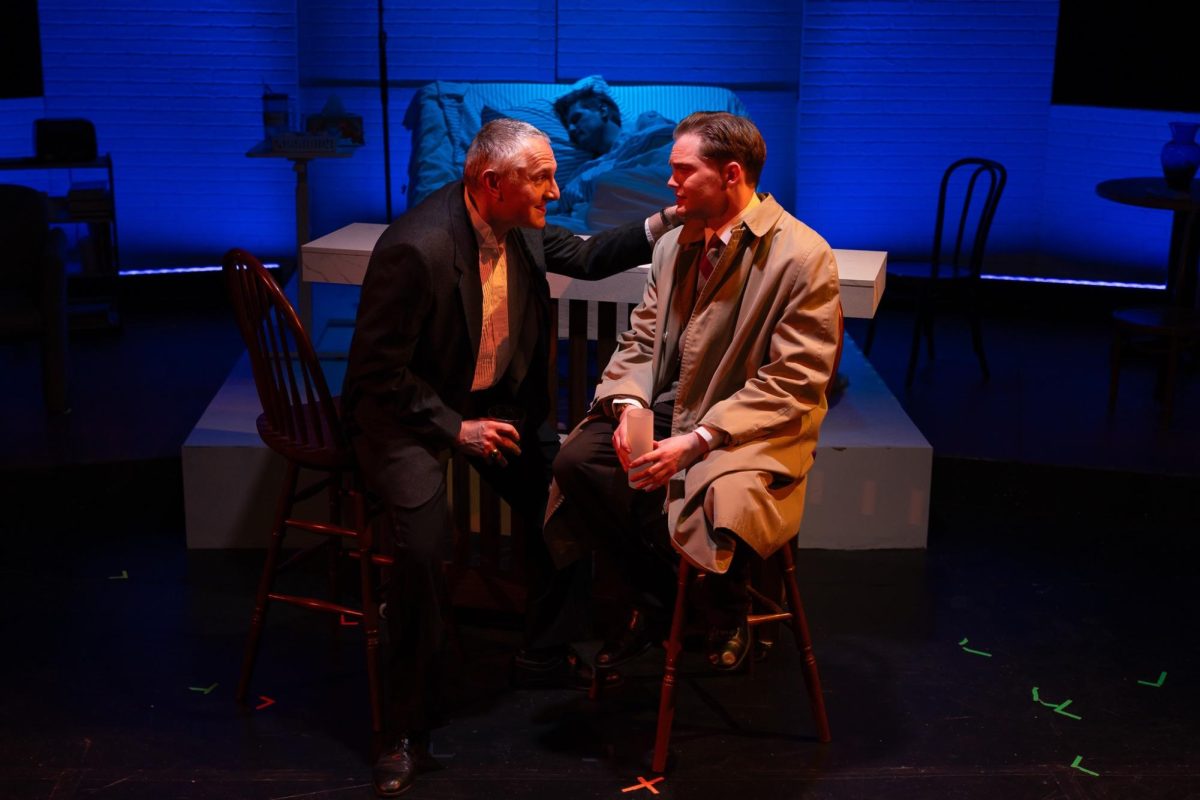
Its most recent production, which opened on Friday, March 27, was a run of “Angels in America” presented by Theatre Incognita and directed by Ross Haarstad.
“It’s a big, complicated, and very ambitious play. It’s certainly a play that is in The Kitchen’s canon, in the sense that it starts important conversations, and it’s really about these characters,” Emily Jackson, the Kitchen Theatre’s producing artistic director, said.
Kitchen Sink series
“Angels in America” is the latest show in the theater’s Kitchen Sink series, which includes any shows occurring in the space outside of the mainstage season.
“The Kitchen Sink shows are a vehicle for local artists and community organizations to use our space to produce their own work. It’s a great way for the theater to open our doors to utilize our building in a bigger capacity, and also to be in relationship with the many wonderful local artists that live and work in this town,” Jackson said.

The creatives behind the show, Theatre Incognita, are a company without walls, meaning the group finds places to rehearse and to perform that are not affiliated with their entity, said Stage Manager Sophie Berger.
“The layout of The Kitchen is very intimate. When you’re on stage, you can see every seat in the house, so it’s a really immersive experience, which means that storytelling can be really powerful,” Berger said.
“Angels in America: The First Millennium” follows two couples in New York City experiencing the AIDS crisis of 1980, grappling with their sexuality, faith, and overarching health concerns, Berger said. It is a three-act show with a runtime of around three and a half hours. The production opened on Friday, March 27, and ran through last Sunday, April 5.
COVID-19 Recovery Years
In addition to the Kitchen Sink shows, the theater performs a wide range of programming under its mainstage season. Jackson handpicks these shows and is currently choosing the lineup for the theater’s upcoming 36th season.
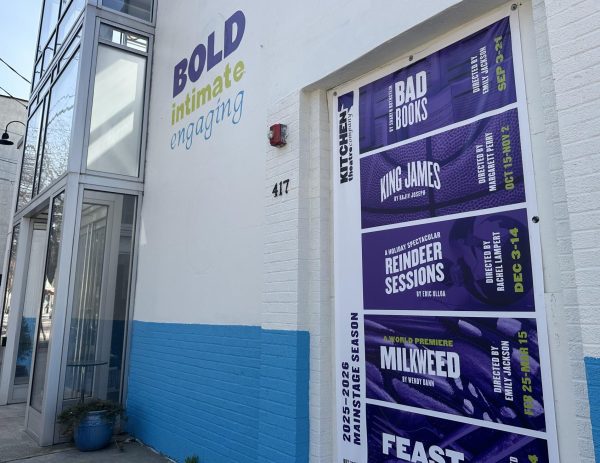
“We produce plays that really have a focus on a diverse group of artists and perspectives, so really encompassing human perspectives across demographics as a way to build empathy, and to bring in people and community who might want to really see themselves on stage,” Jackson said.
Similar to most in-person spaces, the COVID-19 pandemic affected the theater drastically. Staff members at The Kitchen stated they are still working to match the theater’s pre-pandemic numbers.
“The pandemic hit The Kitchen like it hit the rest of the American regional theater with plummeting audience members, ticket sales, and donations,” Jackson said.
Jackson explained how the 2018-19 season was the theater’s peak, having over 800 subscribers and a budget of around $830,000. In post-pandemic years, The Kitchen is currently averaging around 330 subscribers and a budget of $100,000 less than the 2018-19 season.
Building back momentum post-pandemic

Recovering in post-pandemic years, the theater has seen a surge in engagement throughout its 2025-26 season.
“This season we’ve been really, really fortunate to see a huge increase in ticket sales and audience turnout. I think that has been a welcome change since the pandemic, where things have been relatively slow to recover over the last few years. This year really feels like it’s starting to take off again, and that momentum has continued through the season,” said Business Manager Ben Hummel.
Hummel backed up this statement by sharing that the first mainstage show this season broke records immediately, forcing the theater to waitlist people for sold-out shows multiple nights in a row.

The theater offers $45 tickets for all theatergoers, $20 tickets for students and artists, and $10 community tickets. For all preview performances, name-your-price tickets are also available to promote accessibility for all audience members, shared Communications Director Rebecca Miller.
“We live in a time when the value of these community in-person offline experiences is just so high. We all spend so much time inside looking at screens alone, and it’s magical to have this experience where you’re surrounded by people and watching live theater together in person. I believe really strongly in the kind of healing, inspiring qualities that can bring to our community,” Hummel said.


