Thousands of incarcerated people spread across the U.S. have grown to love a library they have never visited.
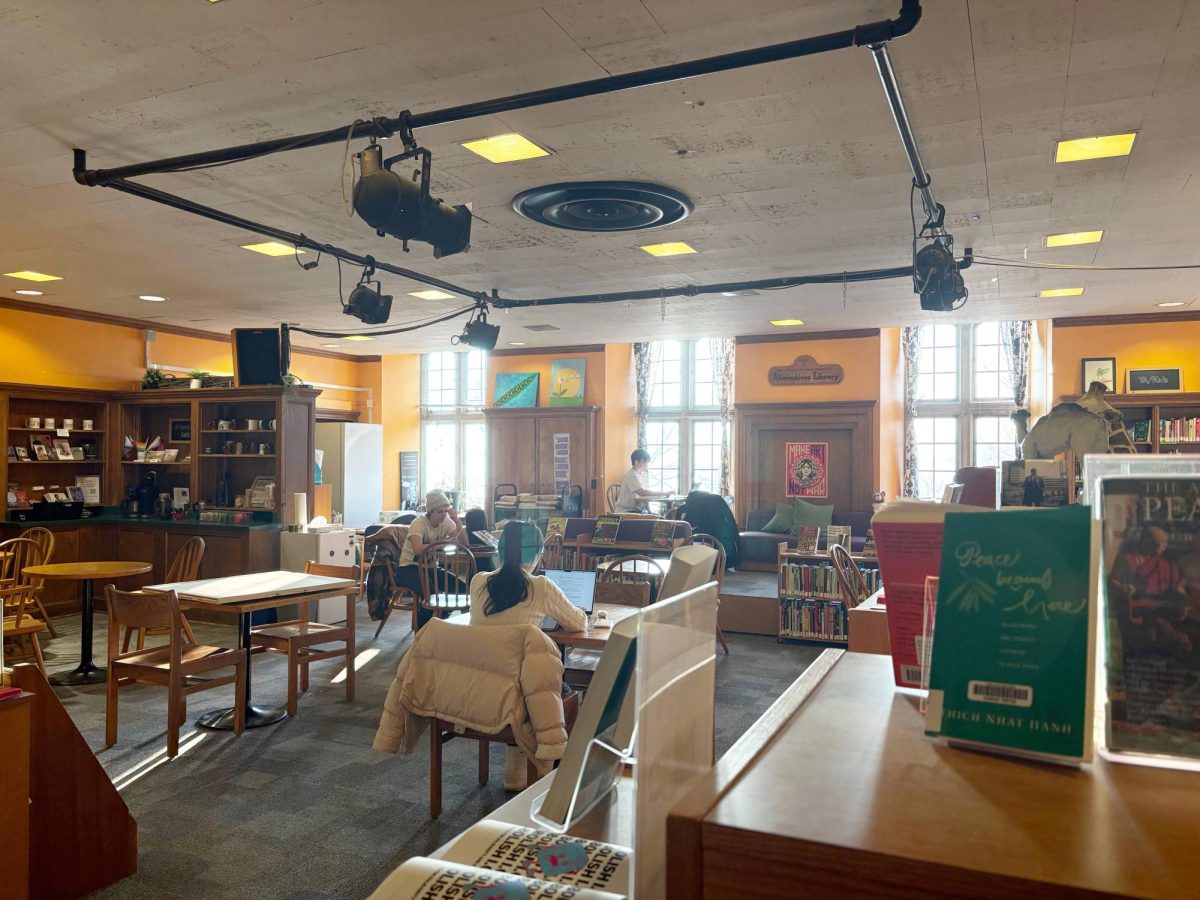
Tucked into the Anabel Taylor Hall building on Cornell University’s campus, the Durland Alternatives Library has provided books and resources focused on alternative, educational and liberatory perspectives since 1974. From its first days, the small, independent library has worked to empower Ithaca community members to drive transformative action.
The library’s mission has spread far beyond Ithaca through its Prisoner Express program, in which library staff and volunteers send books, educational materials and personal letters to more than 4,000 incarcerated people across the U.S.
The Bureau of Justice Statistics reports that 1,230,100 people were incarcerated in state and federal prisons in 2022. More than 19,000 incarcerated people have participated in Prisoner Express since its start in 2004.
Library mission
Durland Alternatives Library is open to everyone, whether or not they are affiliated with Cornell. As a Finger Lakes Library System affiliate, Durland’s materials can circulate to 32 area libraries.
Library Operations Coordinator Jen Graney said she and Library Director Gary Fine try to select books that are outside of the mainstream for the library’s collection, focusing on amplifying marginalized voices.
“[Our collection] tends to be very left of center, especially politically,” Graney said. “You’re not going to necessarily come in and find a Bible here, but you might find some more esoteric things. Our fiction collection … is small, but it’s very focused on translations, things that are published by independent publishers, [things] that you might not find everywhere.”
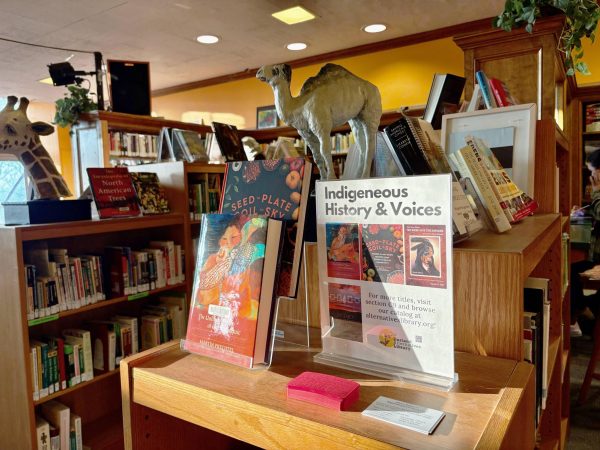
Graney said community building is central to the library’s mission. The staff try to create a welcoming space that invites people to be themselves and engage in dialogue with fellow patrons. Graney said the library also hopes to encourage patrons to build connections and drive social change within their own communities.
Library staff have recently promoted books and resources to help people process and persist through the tense political landscape.
“Being here helps us stay hopeful in a time of what could be despair,” Graney said. “We ourselves are not always in a position to make anything better as individuals, but I think the fact that we’re able to shine a light on what’s happening, and that we’re able to share information and resources, it helps us keep going. We hope that it helps either people who are incarcerated or library patrons … keep going.”
Prisoner Express
Fine felt a similar desire to help people keep going when he started Prisoner Express in the early 2000s.
What started with sending books to one inmate soon grew to sending books to 200 people. Fine could not respond to all of the incarcerated people who wrote to thank him for books, so he started sending them a letter with a theme topic to write about every month. He typed up every reply he received onto a document and sent a copy to participants.
“The people reading each other’s writing started writing things like, ‘Oh, I thought I was going crazy, but …what they wrote, that’s exactly what I’m going through; I’m not going crazy, I’m in a crazy-making place,’” Fine said. “‘And the second thing that everybody started writing was … ‘I thought I hated Hispanics or Jews or Puerto Ricans or Mexicans, but him, her, they, it doesn’t matter what their affiliation is, just what they wrote that’s exactly what’s going on for me. We have more in common than I understood.’”
Prisoner Express also sends a free newsletter twice a year with overviews of their educational programs, and essays, poetry and artwork submitted by prisoners. Prisoner Express participants can sign up to receive volunteer-curated packets with activities, writing and art prompts, and lessons spanning from crocheting to understanding legal documents to the history and politics of the United States-Mexico Border.
The people behind Prisoner Express
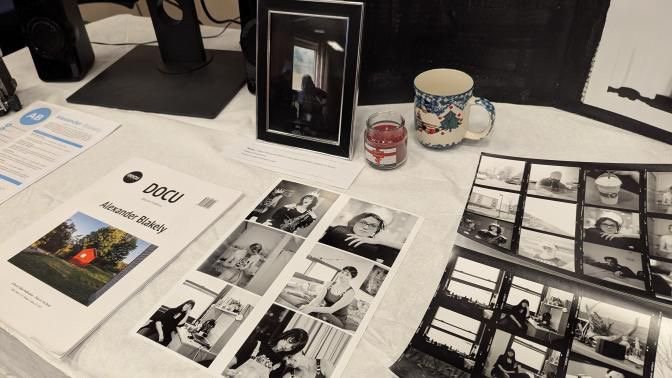
Local artist Treacy Ziegler — who has created gallery shows and taught art classes in prisons — started Prisoner Express’s art program. As she creates lessons and prompts for the art packets, she tries to help incarcerated people understand that learning to create art is not a formulaic process, but rather a chance to observe and reframe the way they see the world.
“Imagination in prison is dead,” Ziegler said. “One of the things that I like to do is think about is how do you expand imagination … If your space is 8 by 6 feet, or whatever it is, being able to look at the structure of your space, the visual phenomena beneath the actual cell, the light and shadow, change [it.]”
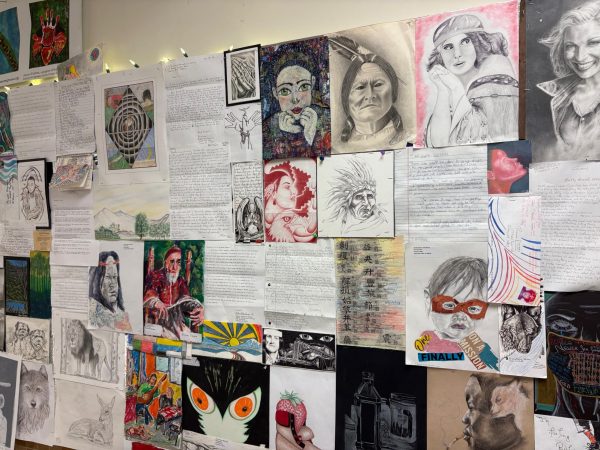
Macedo said Prisoner Express’s on-campus space encourages students, who otherwise might not engage with the prison system, to write letters and connect with incarcerated people. She said she appreciates that the library offers a space to process some of the vulnerable things prisoners share with the community of other volunteers.
“We live in a world that has so many preconceived notions of what it means to be incarcerated and who’s incarcerated and why … and I think for myself and for many volunteers, we’re able to serve as witnesses to the lives of the system,” Macedo said. “We’re able to share experiences and help the other people in our lives maybe be less afraid or be less bought into these really damaging narratives.”
Fine said it can be easy to feel overwhelmed by the cruel and unproductive structure of the U.S. prison system, especially private prisons. Fine said Prisoner Express allows him to focus his energy away from systems outside of his control, and try to help incarcerated people feel cared for and find meaning in their day-to-day lives.
“If I’m going to be effective in the world, it’s changing things one relationship at a time,” Fine said. “In Prisoner Express, I have lots of volunteers doing the same thing in the letters that they write, and so in the long run, I think we’re making things better in our own ways.”