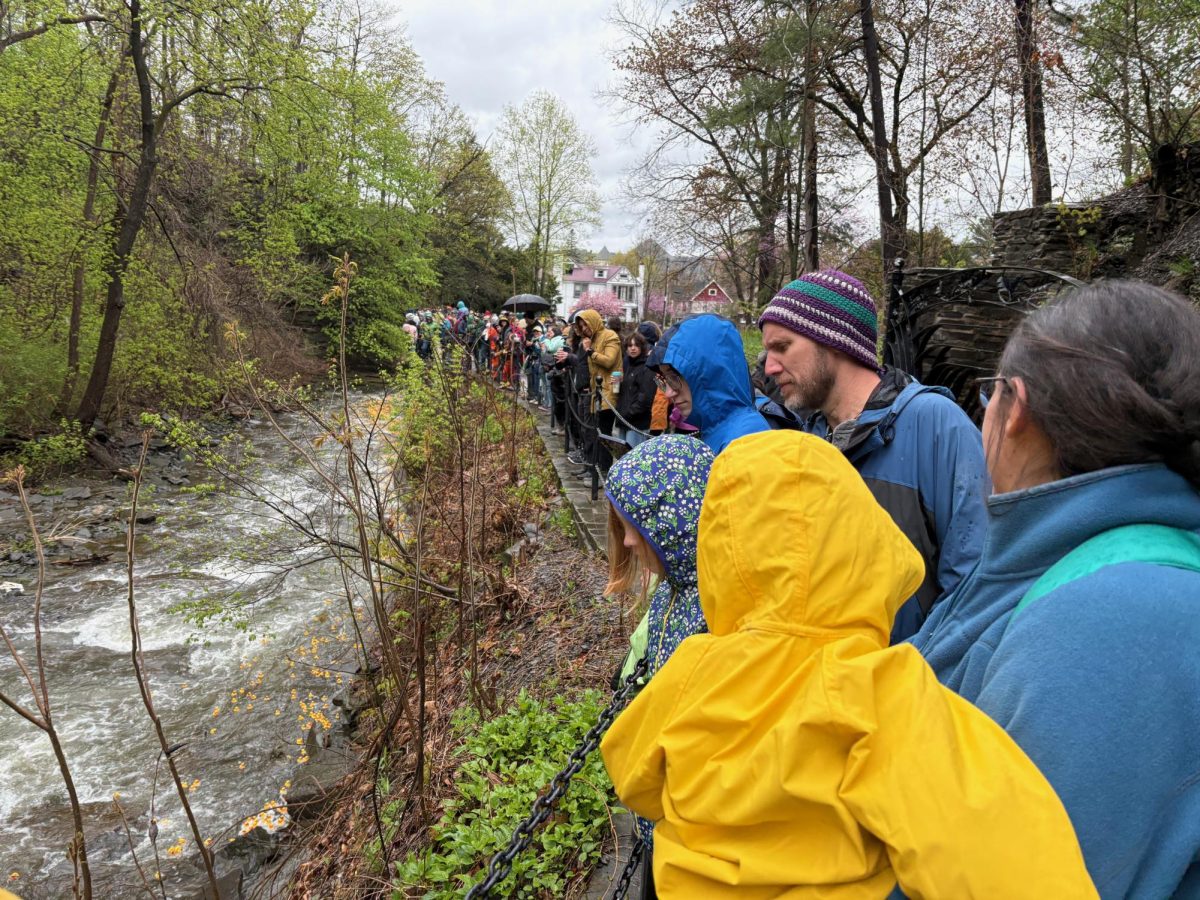
Ithaca resident Dorota Kossowska knows spring has arrived when she sees 3,000 rubber ducks bobbing down Cascadilla Creek.
Kossowska and hundreds of others gathered through sometimes heavy spring showers April 25 to watch the 25th Tompkins 4-H Duck Race. The duck race raises money to support Cornell Cooperative Extension Tompkins County’s 4-H youth programming.
The 4-H duck race has become a tradition for locals like Kossowska, who grew up watching the race with her family and friends.
“It’s a real sense of community,” Kossowska said. “A lot of people like to go year after year. I’ve run into a lot of people that I know. … It’s short and sweet and it’s just really cute. It’ll put a smile on your face.”
Community tradition
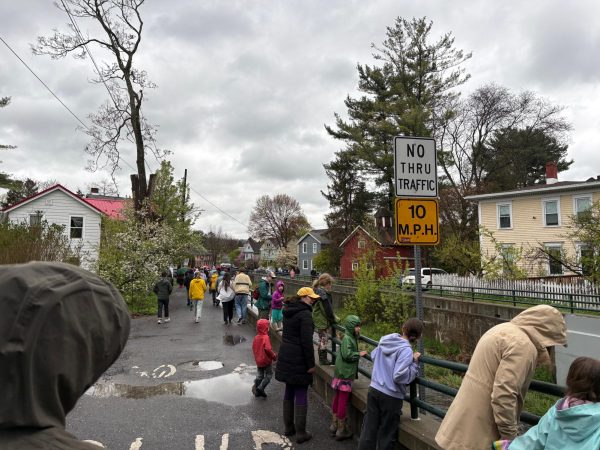
The race starts at the Cascadilla Creek falls at the Cornell Botanic Gardens’ Cascadilla Gorge Trail, when 4-H staff members and volunteers release the rubber ducks into the creek. Hundreds of people waited for the duck drop at the trail, and many continued to follow the flow of ducks bobbing down the creek. Other spectators waited on the streets along the creek for the ducks to float by.
Nancy Judd and her husband Tim traveled from Highland Falls, New York to attend their first duck race this year. Judd said their son has helped coordinate the duck race for about 10 years, and they were excited to finally see the race unfold. Judd said she was shocked to see how many people turned out through the rain to watch the duck release.
“We found a spot at the duck drop, and when we turned around to leave, there were all these people there,” Judd said. “It was nice to see the community come out to support it. … The kids were so excited, and that made it contagious, their energy.”
People could purchase a duck number before the race begins, and win prizes if their duck was among the first to cross the finish line. The first duck to cross won $500, and the next 39 ducks won prizes like a speaker, a DeWalt drill and gift cards to local businesses. The last duck to cross the line also won a prize.
Shelley Lester, rural youth services coordinator, said 4-H program volunteers and staff follow the ducks as they flow down the creek, making sure that none get stuck along the way. Lester said that depending on how fast the water is flowing, it can take up to two hours for the last duck to finish. CCE-Tompkins stages people at the finish line to scoop up ducks and pass them to shore to be organized into bags and storage containers.
After the race, the 4-H team counts the ducks, organizes them by number, and gets ready to plan the next race.
“It’s kind of like a cycle,” Lester said. “Once we take care of everything, we’ll take a little time off, we’ll debrief, and then we’ll start getting ready for the next year.”
Accessibility is key
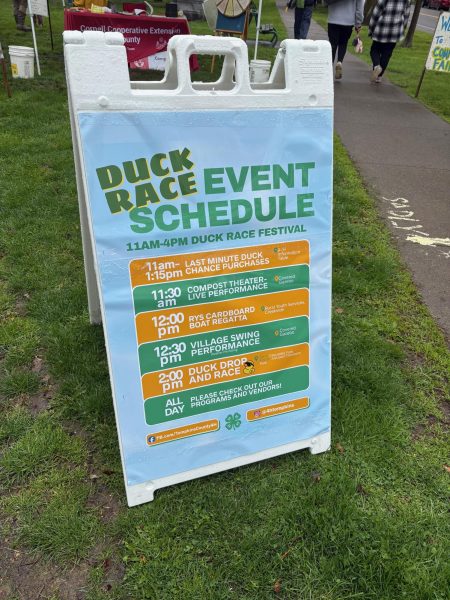
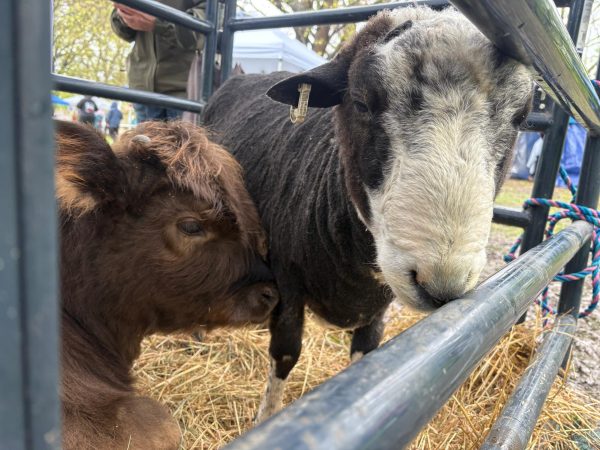
While previous duck races have finished at CCE-Tompkins’ Education Center on Willow Avenue, the 4-H team moved this year’s finish line to Thompson Park. Venda Mae Harris, 4-H youth development and volunteer manager, said the move allowed CCE-Tompkins to expand the race to make it the biggest event yet, with several vendors, live music, food, educational activities and animal meet-and-greets.
CCE-Tompkins’ compost education program also hosted a compost fair — its first since the start of the COVID-19 pandemic — during the duck race. Compost Outreach Coordinator Ainsley Rothschild said the fair included six booths providing in-depth information about components of composting, like setting up a compost bin and layering compost.
Rothschild said the compost education program captured some of the excitement from the duck race to encourage community members to learn about composting. She said events like the duck race help CCE connect with community members and share key resources and information.
“Most of our programming is really low cost or free, because it’s for the public, so you don’t have to go back to school if you want to learn how to plant a garden, you don’t have to go back to school if you want to build a compost,” Rothschild said. “We make it as accessible as we can, so you’ll see us at a lot of events.”
Supporting kids
Cornell Cooperative Extension works with local, state and federal government agencies, Cornell University and the national land grant system to provide educational programming throughout New York, especially focused on the environment.
CCE-Tompkins provides youth programming through its 4-H programs, which include 4-H clubs, rural youth services, 4-H urban outreach programs, Primitive Pursuits wilderness education, workshops, camps and special events. CCE-Tompkins serves more than 4,000 kids ages 5 to 19 in urban and rural areas across the county each year.
Harris said the duck race is CCE-Tompkins 4-H’s largest fundraiser, and she hoped that expanding this year’s event would help the organization offer more opportunities for kids across the county.
“This fundraiser helps us to cover staff time, to be able to be out in the field, working with the youth, being able to cover supplies and program materials for the youth for different programs that we’re doing, so that it’s either free or very low of charge for the youth in order to participate,” Harris said.
Harris said she participated in CCE-Tompkins’ 4-H programs throughout her childhood, and was a teen member of the 4-H board that helped plan the very first duck race. She said she has built lifelong connections with fellow 4-H’ers, many of whom now volunteer to give back to the programs that they grew up with. Harris said it is incredibly rewarding to support 4-H participants, who pour so much time, dedication and passion into their activities and projects.
“Seeing how the money impacts the youth and supports them, and providing them with opportunities, that is the most important thing,” Harris said. “It just amazes me how much these kids do.”