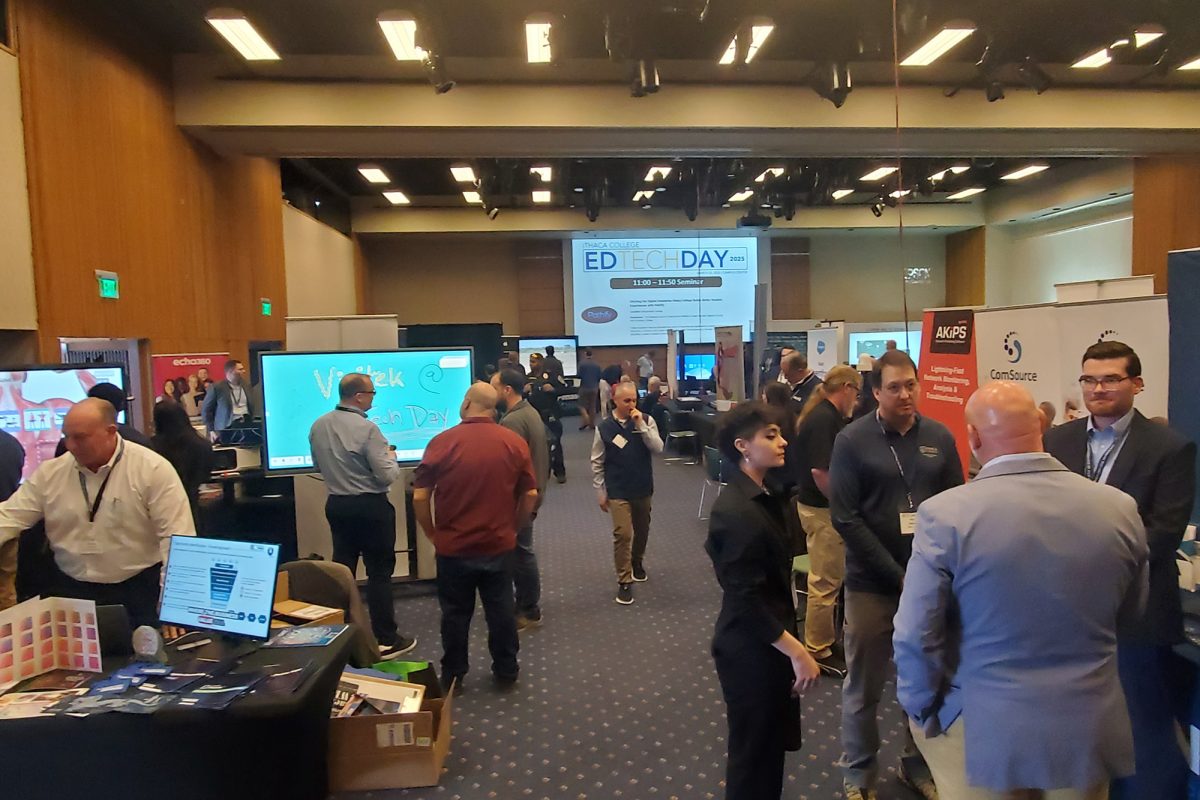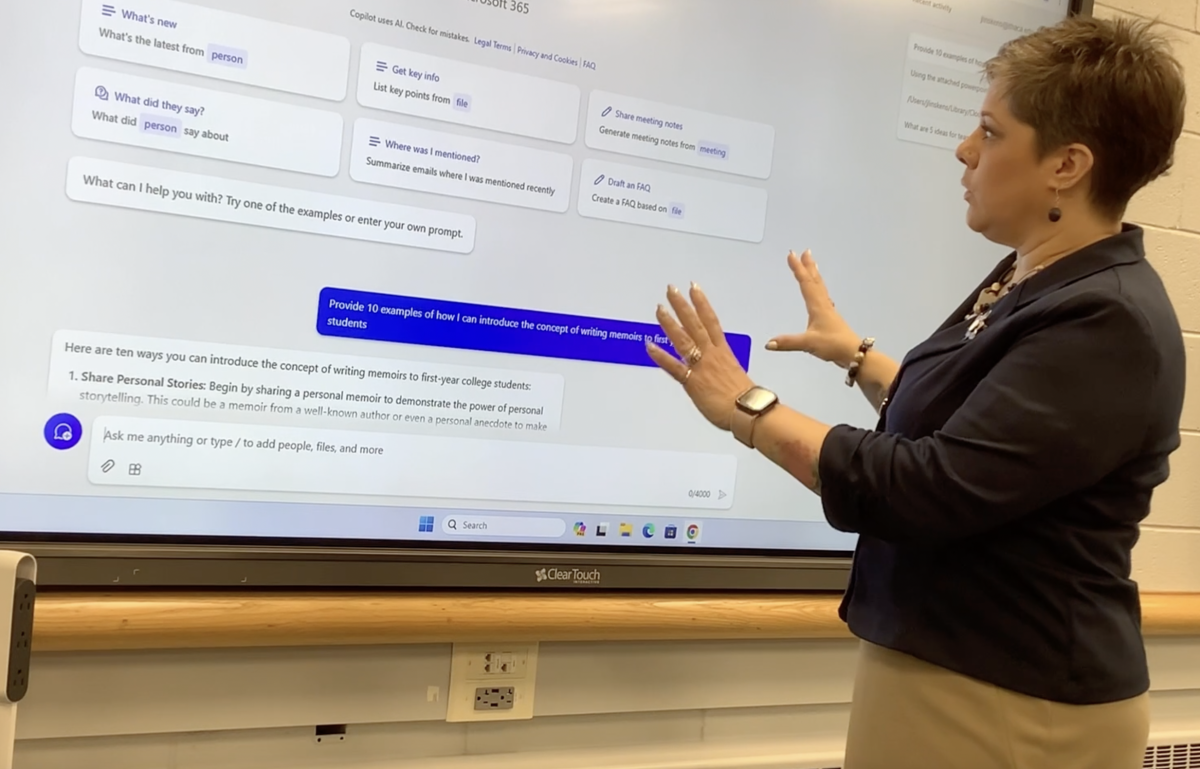
For the past 32 years, IC has hosted Ed Tech Day to inform the community about ever-evolving technology and how it affects daily life. This year, attendees explored computers, artificial intelligence and robots. Tours of IC facilities, including the Makerspace, Esports Lounge and Dolby Atmos Mixing Studio, were provided, as well.
Throughout the day, attendees visited showcase booths and attended 20-50 minute sessions based on this year’s program schedule. This year, many of the presentations focused on the use of artificial intelligence in higher ed. Kayla van Dinther — executive assistant to the college’s senior vice president of strategic services and initiatives, business manager at IC and Ed Tech Day organizer — said via email that Ed Tech Day brings people together to explore how technology can enhance the way we teach, learn and connect.
“It’s a day where ideas are exchanged, relationships are built, and innovation comes to life across the Ithaca College community and beyond,” van Dinther said via email.
Andrew Hogan, director of engagement and client technologies at IC and Ed Tech Day organizer, said via email that one of the goals of Ed Tech Day is to provide a dynamic space for participants from across the region to engage with emerging technologies and innovations.
“The event encourages attendees to reflect on the evolving role of technology in their work,” Hogan said via email. “It helps bridge innovation with practical application across the broader community which USA Today identified as one of the key reasons why they recognized Ithaca, NY as one of the most innovative cities in the nation.”
— Story by Kaeleigh Banda
Technology and creativity: The William Blake example
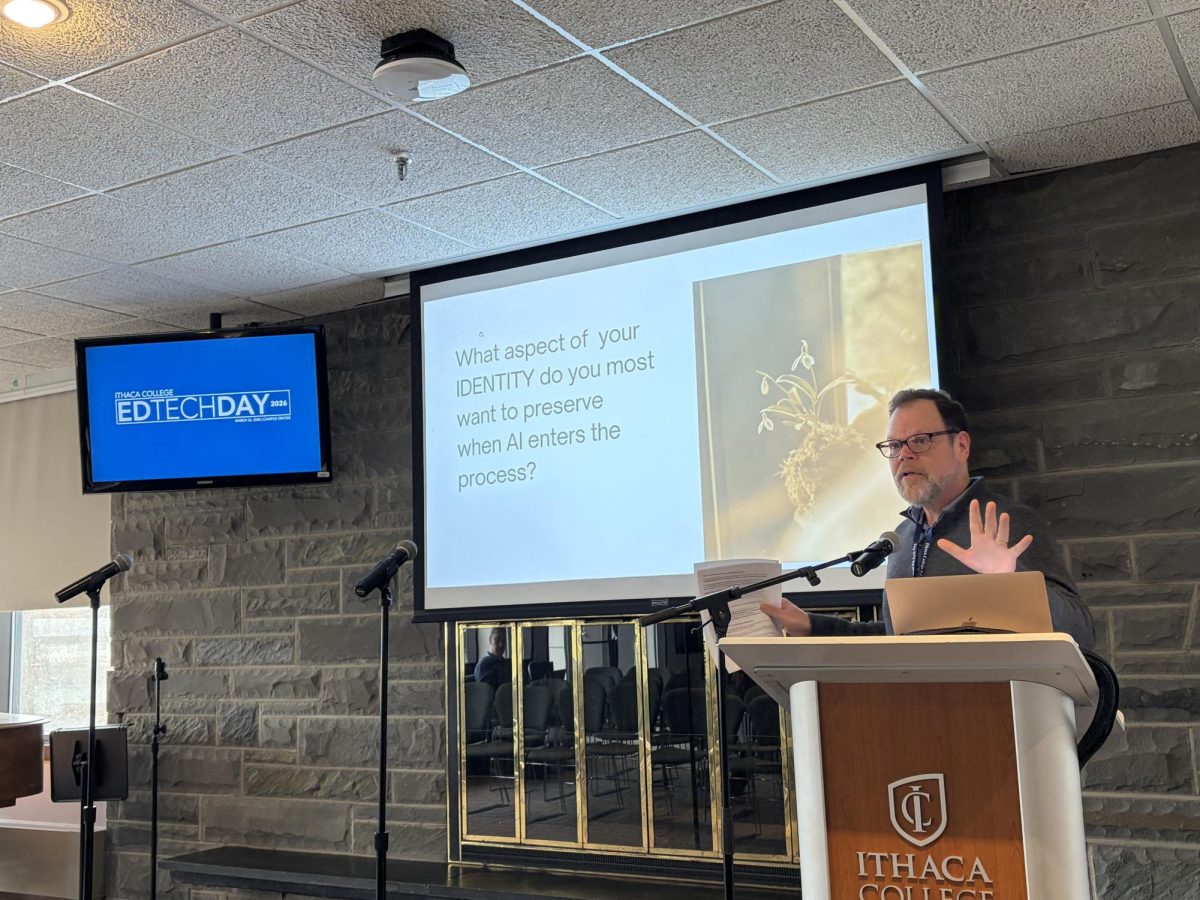
2:30 p.m. — Nathan Pritts, the principal strategist for artificial intelligence at the University of Arizona Global Campus, presented on potential strategies for prioritizing the human creative process while using AI tools for writing.
Pritts began the presentation by describing the creative process of William Blake, an English artist and printer, and his use of the printing press. During Blake’s time, the printing press was regarded as an almost “living technology,” faster and more effective than human hands. While Blake used the printing press to produce the base of his illuminated manuscripts, he insisted on making detailed alterations to the works himself.
“The press produced something reproducible, and Blake insisted on intervention,” Pritts said. “So the result wasn’t a rejection of technology, but it was a demand that creativity remain an active human process.”
Pritts, who worked as the chair for first-year writing before transitioning into the role of principal strategist for AI, came face-to-face with questions of AI usage in education shortly after its invention.
“A lot of people throughout my university, in the classes I teach and the teachers that I work with, were dealing with it in the classroom on a daily basis,” Pritt said. “I felt a responsibility to try to figure out not how to keep it out of the classroom, but if there might be a way to use it more productively.”
Pritts proposed that using AI alongside human critical thinking and reasoning allows individuals to harness the benefits of these tools without losing their creative individuality.
“When we ask AI what to think, we defer to it,” Pritts said. “When we ask AI how to think for a framework or a process or a starting point, we stay in the creative driver’s seat”.
The process of asking AI for a framework or suggestions, and incorporating that into one’s work, is known as integrative leaps. While AI generates potential improvements to the story, it is the writer’s responsibility to determine if or how to integrate these leaps.
Integrative leaps can be separated into four general categories, Pritts said:
- Judgment: Deciding which suggestions mattered and how to use them.
- Interpretation: Making sense of semantically distant or confusing suggestions.
- Synthesis: Integrating new ideas into an existing narrative logic.
- Revision: Reworking both the suggestion and the prior text to make them coherent together.
Pritts argued that AI’s ability to generate text and images on its own is not the major risk it presents to users.
“The risk is the temptation to think of all of that as finished or flawless, or even good and to accept speed and polish as substitutes for judgment, intention, and care,” he added.
— Story by Emily Micklos
Students weigh in on IC’s use of AI in education
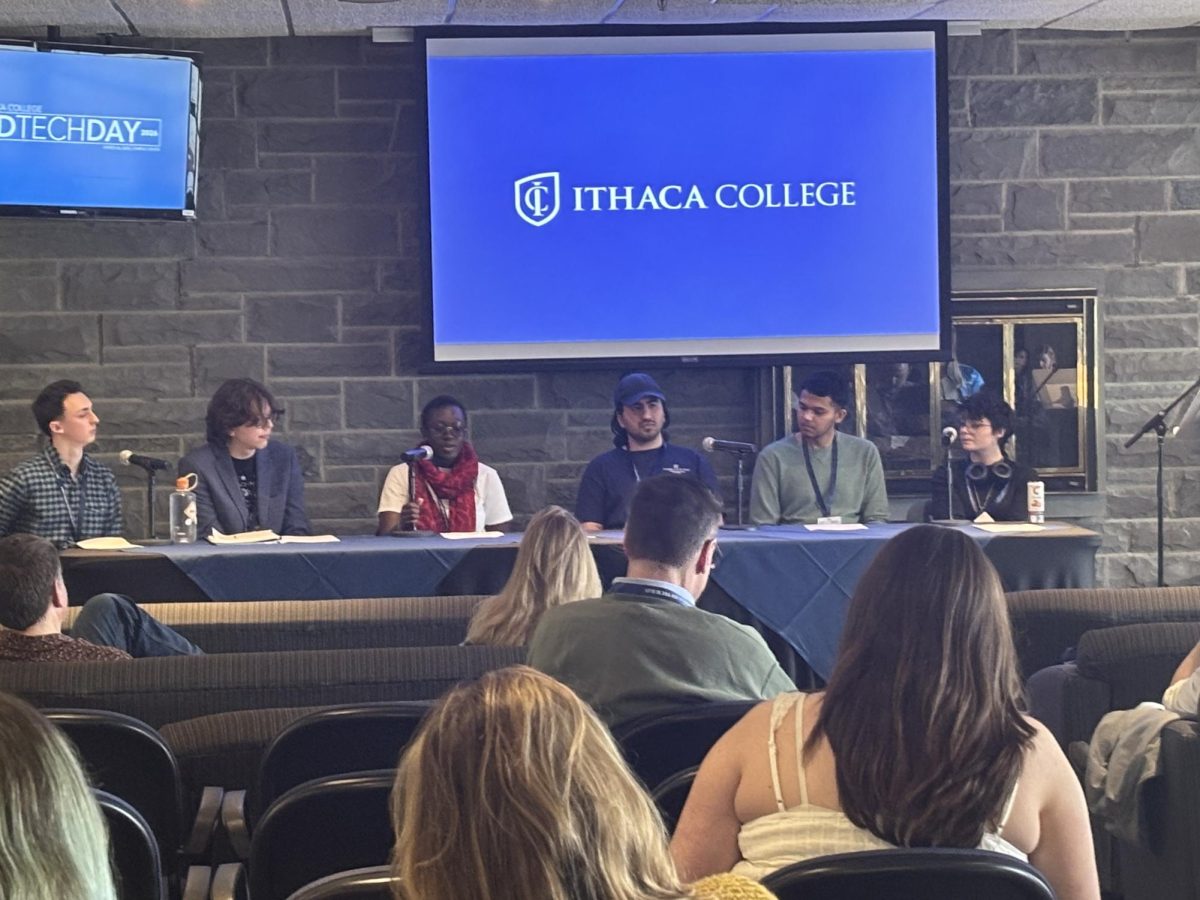
1:30 p.m. — In the growing age of Artificial Intelligence, young voices can be some of the loudest.
Associate Director of Project and Process Innovation, Jenna Lamb, hosted a panel with six Ithaca College students to discuss their experiences and views on AI in the classroom and at the college.
“Over the past few years Artificial Intelligence has moved into something we used more as an experimentation into something students use in their everyday lives,” Lamb said.
More than 86% of students were found over the last academic year to have used AI in their studies, according to the Digital Education Council. The panel was aware that AI is going to be used by students but all advocated for personal oversight.
First-year student and tech columnist for The Ithacan, Samuel Radcliffe, said that in the educational space, students should only use AI as a resource, not a substitute.
“(AI) is supposed to help you, but it’s not supposed to do it for you. You want to feel like you’re still in the driver’s seat,” Radcliffe said.
While students on the panel found AI to be a good study and self learning tool, concerns rose about the people behind popular AI companies like Open AI and the way sensitive data is shared.
Sophomore Computer Science major Sam Knight compared much of the creation of AI to those of the Nuclear Bomb.
“We are the same country that built the bomb before the power plant,” Knight said. “I feel there was more going into the creation of the bomb than those who are creating these large language models.”
In October 2024, Ithaca College implemented AI into its organization of student information for its ICare program. Knight found concern with the mix of student information with AI models.
“I think it’s unacceptable to mix sensitive data with a very insensitive program,” Knight said.
The group concluded that AI is a useful tool for discerning information and it will continue to be a part of our lives. However, for students like Knight, it is important see the college consult in-house experts in fields like computer science before continuing with its integration of AI in education.
— Story by Billy Wood
How IC integrates AI
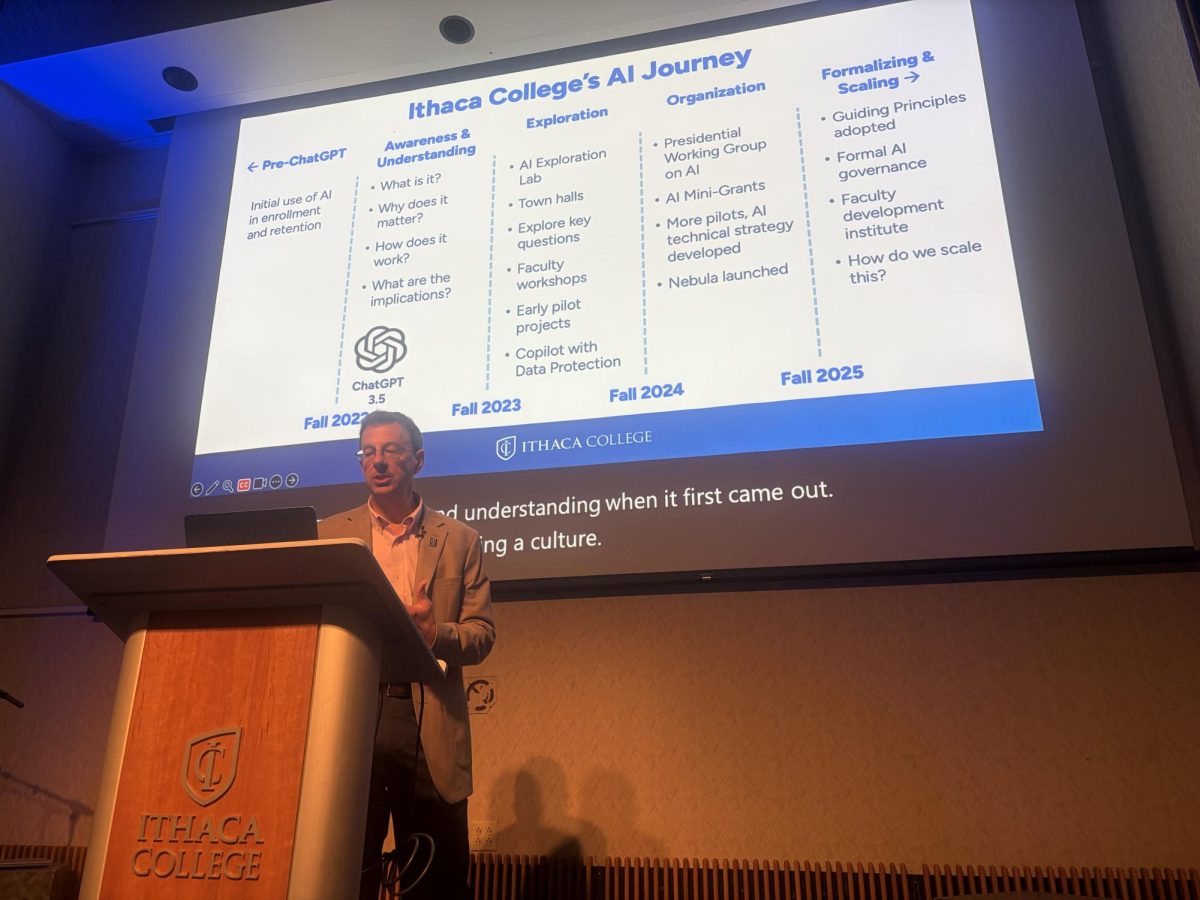
1:00 p.m. — David Weil, senior vice president for strategic services and initiatives at Ithaca College presented about the ways the college is using AI in its everyday operations.
Weil said there are five things to consider when thinking about the use of AI in higher education: longitudinal view, articulating return on investment, creating more nuanced conversations, understanding the environmental impact of AI and preparing students.
Pamela Brown is assistant director of Information Technology at SUNY Geneseo and attended Weil’s presentation. Brown said on her way to the event she saw lawn signs condemning the plans for a new AI Data Center on Cayuga Lake based on the impacts the project could have on the environment. Brown mentioned this concern during the presentation.
“I saw a slew of signs that were saying, no data center,” Brown said. “I had no idea what that was about, until I sat in the seminar. And as Mr. Weil began to talk about the data centers and their impact . . . it just brought to light some of the things that I’ve seen.”

Weil said he understands there are environmental concerns when it comes to AI and he feels the college needs to be conscientious about the way it uses the technology.
Weil said colleges have a role in shaping students’ understanding of the technology to help them navigate the post-college world.
“I think we need to be intentional and thoughtful about where are the appropriate uses for AI,” he said.
— Liam McDermott
A tech assist for healthcare students and professionals
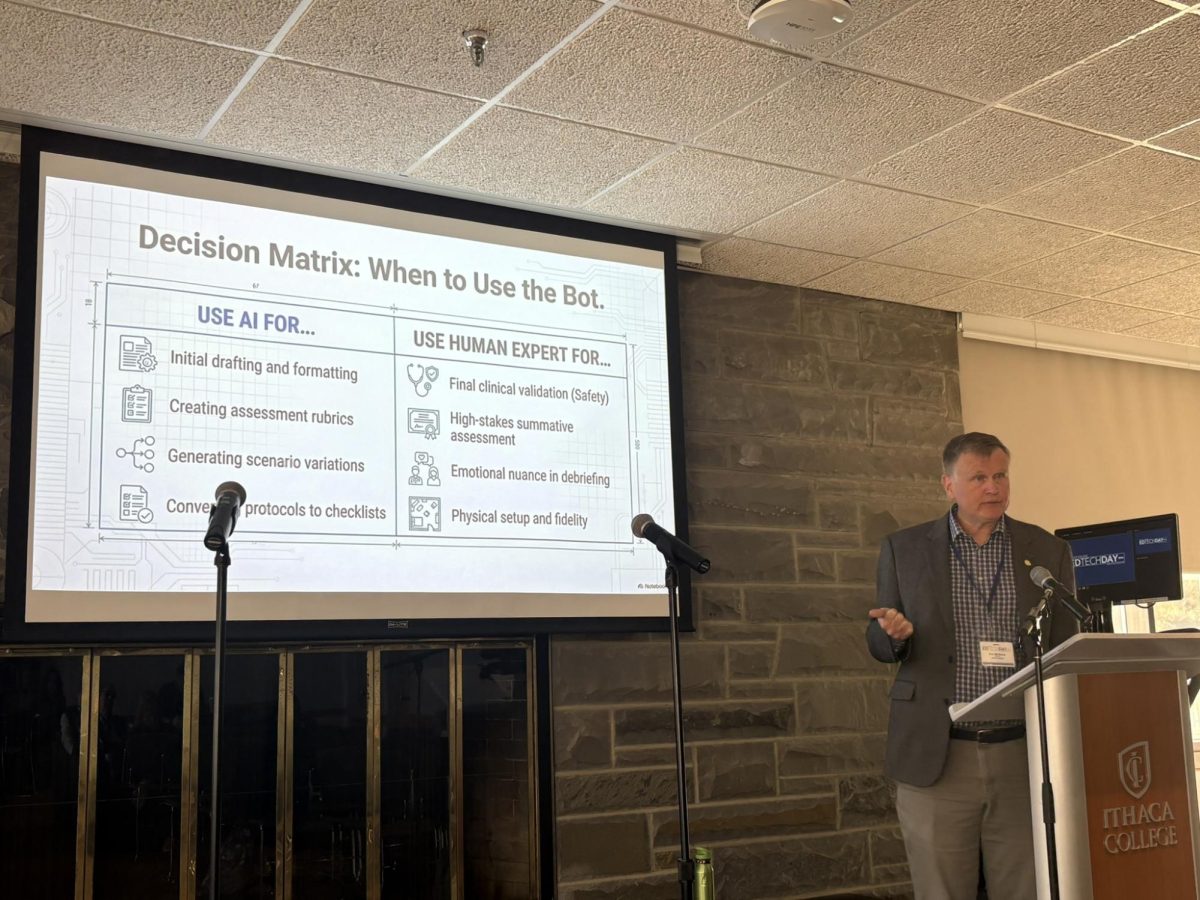
Simulations are an essential part of preparing health care workers to face trying circumstances – but creating them can be expensive and time consuming. A team of faculty members from Ithaca College and hospital leaders from the University of Rochester’s Strong Surgical Center are working to remove these barriers by using AI to create simulations.
Pat McKeon, professor of Exercise Science and Athletic Training, and Deb Wuest, professor of Health Sciences and Public Health have been collaborating with Nurse Manager Carrie Royse and Rebecca Vincent, Assistant Director of Perianesthesia Nursing, to develop the EPICS-ADDIE-INACSL Integration Model for Health Professions Simulations. Faculty members or healthcare leaders can plug in their madlibs-style script to large language models like Chat GPT, which then create simulations to use with healthcare students and professionals. The LLMs also provides a critique of the students’ performance after they finish the simulation for the facilitator.
McKeon said AI can make instructional design much more efficient and flexible, but it does not serve as a replacement for experienced faculty members, staff educators or program directors. Healthcare educators should review and critique the simulations for accuracy before giving them to students.
“It’s not a matter of just getting an output from AI and giving it to a student and hoping for the best,” McKeon said. “We have a heightened responsibility to cultivate our own expertise and maintain our expertise in the topic areas that we have. … The summative assessment of performance for the student, especially, still is at the responsibility of us as health professions educators.”
Vincent said the integration model script allows busy healthcare leaders to design meaningful and engaging emergency situation simulations to provide more frequent training for their teams.
“We experience a lot of fight or flight in health care, we experience a lot of adrenaline, and the more we can practice and build that muscle memory in a safe space, the better prepared we’ll be in real life when we’re navigating those situations with real human beings,” Vincent said.
— Story by Kai Lincke
Professors: Use of technology spurs critical thinking
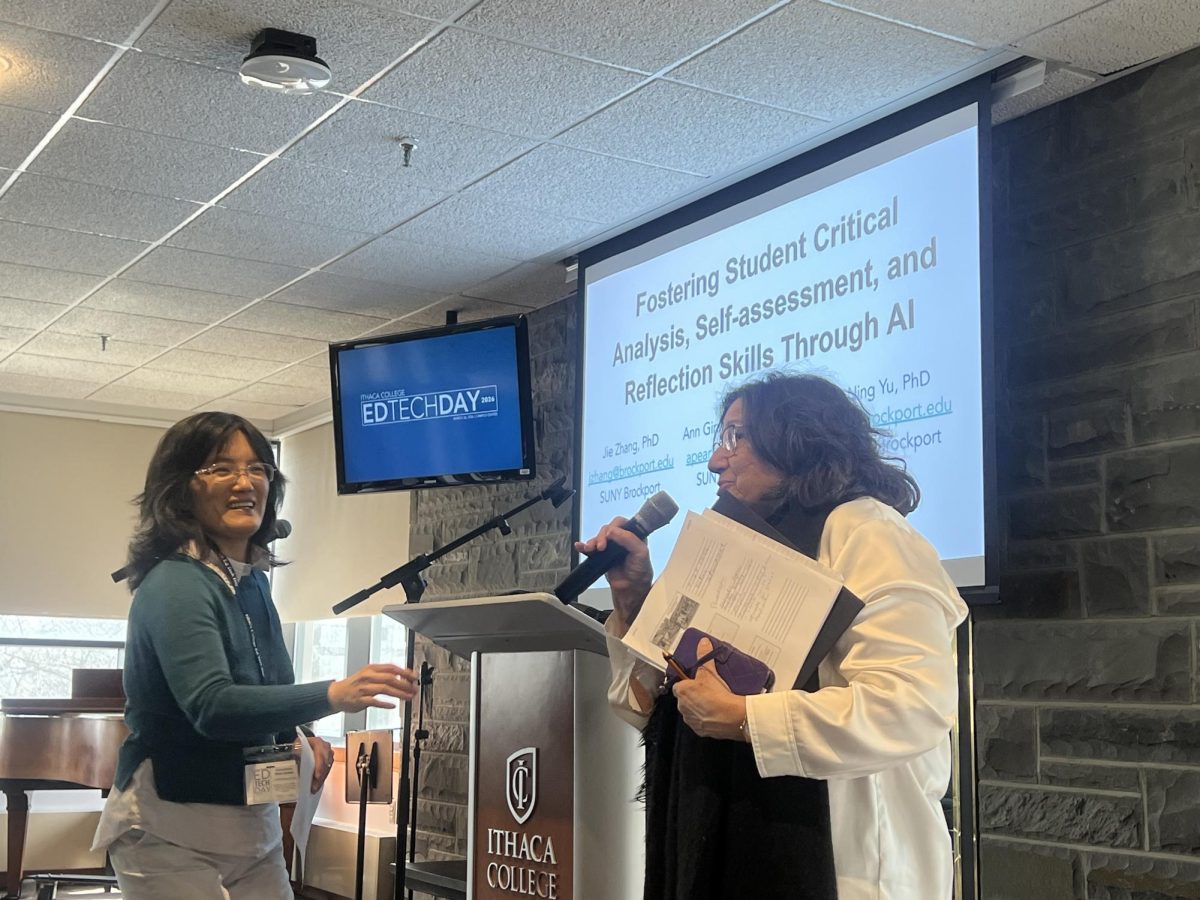
12:30 p.m. – Professors are navigating evolving technology they say will help students to learn important skills.
Two of those professors, Jie Zhang and Ann Giralico Pearlman, from SUNY Brockport, presented on how to foster student critical analysis, self assessment, and reflection skills through the use of AI.
Since 2023, Zhang has been researching how AI tools can support the development of student’s critical analysis skills and also how teachers can use AI as a grading system. She created a solution titled Technological Pedagogical Content Knowledge Framework (TPACK).
TPACK led to the development of Zhang’s faculty-student collaboration: An AI-powered tutoring project called EduAlly. The project promotes collaborative growth by linking student experiential learning and faculty learning through this platform.
As a professor who dedicated three years to researching AI and uses it in her classroom, Zhang said AI is not as scary as we think.”
“Don’t be afraid of AI.” Zhang said. “Don’t be overwhelmed by AI. I think people can go either way. Just take small bites of it one at a time and try and see what you feel about it. You cannot avoid it.”
Pearlman said she incorporated the use of AI generative images in her global and consumer culture class as part of an advertisement assignment.
Understanding how AI can be used in the classroom and how it can be a positive tool is one of Pearlman’s biggest takeaways from teaching with artificial intelligence.
“This is bigger and you have to be able to see it and try it and be able to analyze it.” Pearlman said. “You have to be able to look at it as a unit.”
After working with the doctored photos, Pearlman’s students concluded that using AI for their assignment was not as helpful as they expected it to be. That’s because, they said, it was generating images they did not ask for and that looked too doctored.
However, Pearlman explained, even though this was something that didn’t work for them for this project, it will help them with critical thinking.
“What I think is really important about this is (the students) are going to be able to critically analyze more.” Pearlman said.
— Story by Alliey Magistro
Safely embracing AI in education
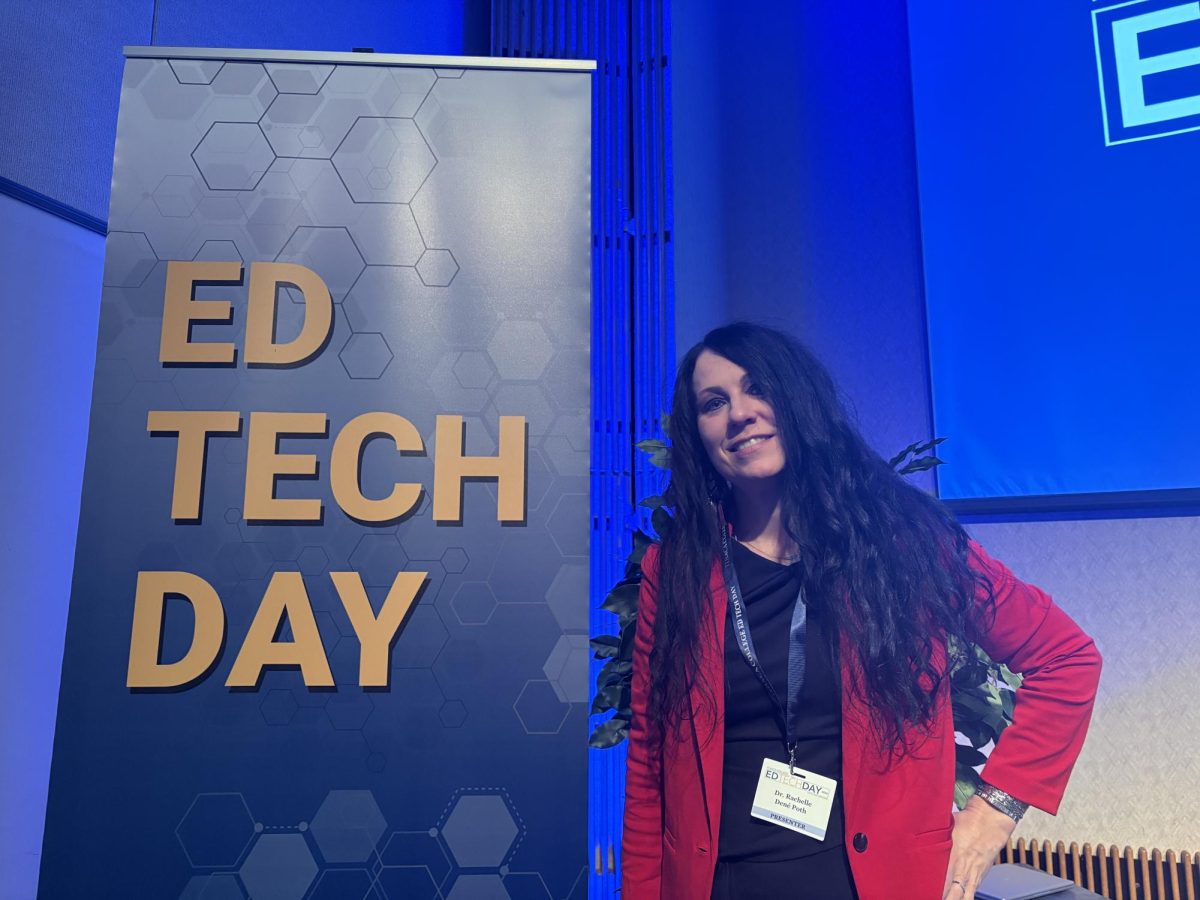
11:30 a.m. – With stills from “The Terminator” and “I, Robot” on the screen, Rachelle Dené Poth opened her 10 a.m. session by asking, “What comes to mind when you think of AI?” The audience engaged, shouting answers ranging from “Water” to “Cheating” and “Efficiency.”
These were some of the complex topics that Poth, an educator and attorney, tried to tackle in her 50-minute session called “Building AI Literacy with Intention, Ethics and Humanity.”
Poth emphasized the importance of taking a “human in the loop” approach of involving real people in AI-powered workflows for integration and empowering students to foster soft skills like resilience and leadership alongside it.
“It has been here since the middle of the last century; it is not going away,” Poth said. “And it is the number one skill in demand So, we have to learn about it because our students and ourselves need to know about it.”
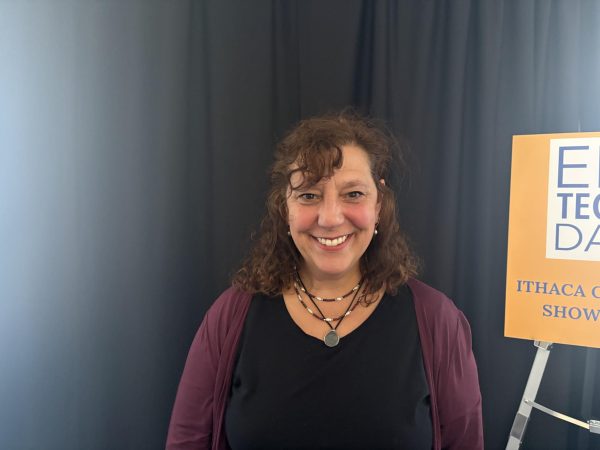
As an attorney, Poth said that it is also important for educators to read the lengthy terms and conditions for the AI tools that they use to protect the privacy of students and their families. Poth said that schools should establish thoughtful guardrails and examine how their students’ data might be used to ensure responsible integration of AI in education
Anne Almekinder attended the session as a representative of the Greater Southern Tier Board of Cooperative Educational Services and said she appreciated learning more about the privacy aspect of AI tools. Almekinder said she uses AI frequently to guide her teaching.
“What I really wanted to go back down that rabbit hole of how sites were tracking information,” Almekinder said. “They say we’re saving your privacy, but they’re not saying who is behind that curtain.”
— Story by Prakriti Panwar
Vendor showcase offers chance to connect over innovations
11:30 a.m. – More than 60 local and international vendors are set up for the vendor showcase in Emerson Suites, ready to talk with visitors about their products and the latest technology trends.
Daniel Jones, an account manager at Crowdmark, said this is Crowdmark’s first time at EdTech Day. Crowdmark, a Toronto-based online grading platform, started working with Ithaca College faculty in the School of Humanities and Sciences this year.
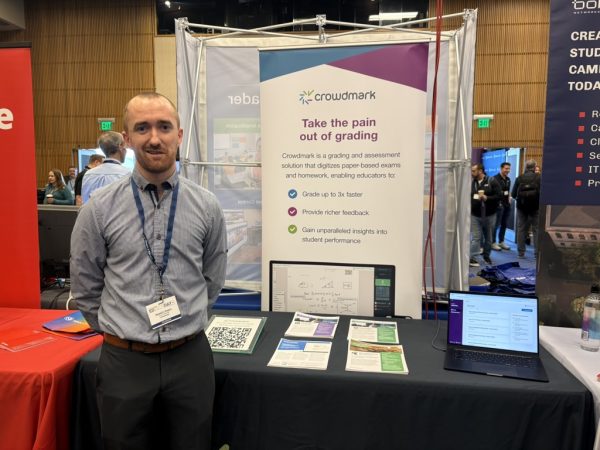
Jones said Ed Tech Day has allowed him to meet IC faculty in person and learn more about the resources on campus, which will allow Crowdmark to better support the departments using their platform.
“Since COVID and the pandemic, virtual has become the norm,” Jones said. “I think the conversations you have in person are a lot deeper than what you’ll have when you’re in front of the screen today. … I’m having conversations with people that are not directly in line with what we do, but it gives me a better understanding of life at Ithaca College.”
Jones said he appreciates how EdTech Day allows companies to connect educators from many schools and institutions, and hopes to increase exposure to Crowdmark throughout the day.
— Story by Kai Lincke
Driving AI on campus, preparing students for employment
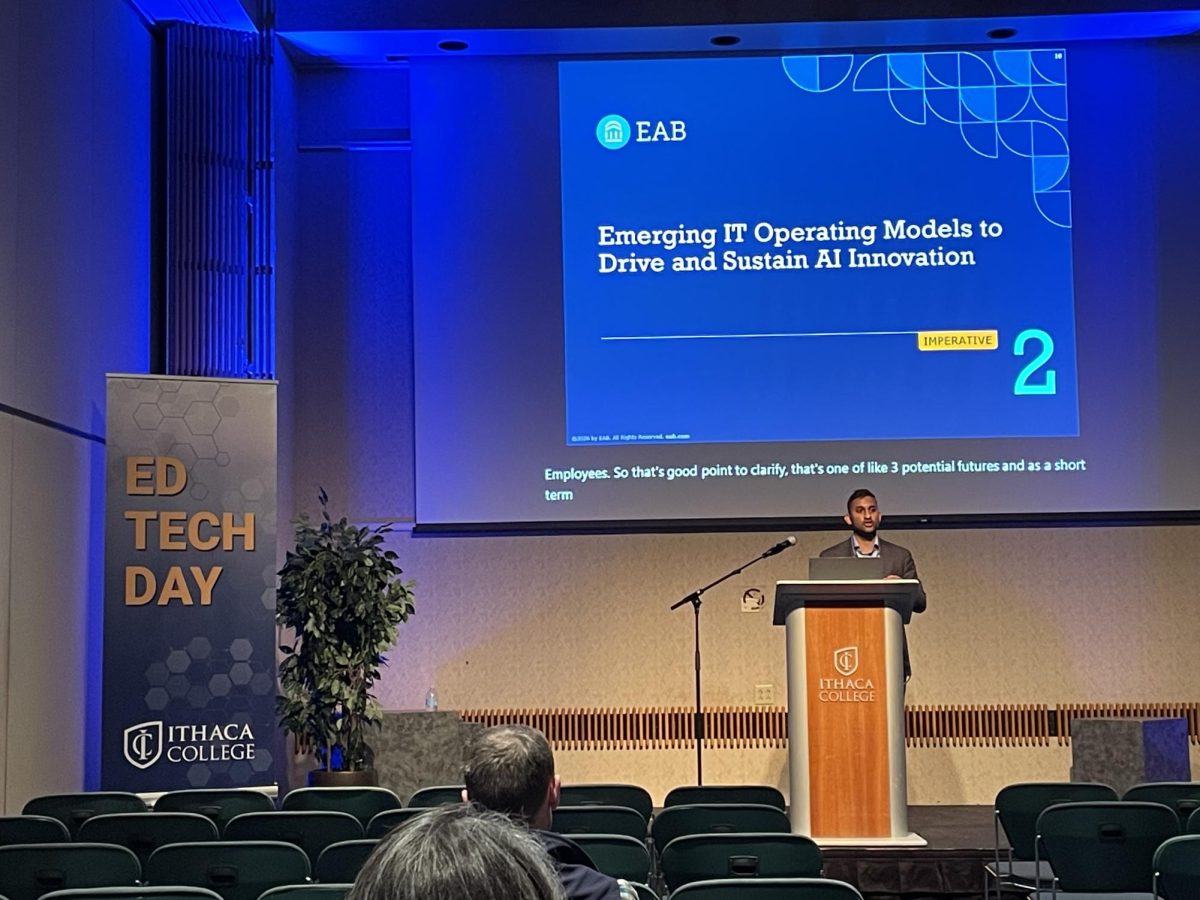
10:30 a.m. – Abhilash Panthagani, is the associate director of research on the IT strategy team at Educational Advisory Board, a California-based company that helps schools support student’s use of technology.
Panthagani discussed various aspects of AI integration in higher education focusing on practical topics such as preparing students for “long term employment” by allowing them to anticipate the way AI will be used in their field.
“Technical skills used to be the immediate avenue into a role . . . that doesn’t necessarily exist to the same extent,” Panthagani said.
He emphasised the shift in what employers are looking for from new hires.
Panthagani stressed the soft skills like reliability, punctuality, advertisement skills, experience, and strong communication since technological skills are being replaced by AI.
One example of this change is a 6.1% drop in computer science employment rate in the past year.
His message for those who are worried about a more AI-driven education is focused on moral principles, because its use is inevitable. For those who have strong feelings against personally using AI, he advised (to incorporate AI), “figure out ways that mesh in with your principles.”
— Story by Christian Gratto
Cyber resilient schools prevent learning disruptions
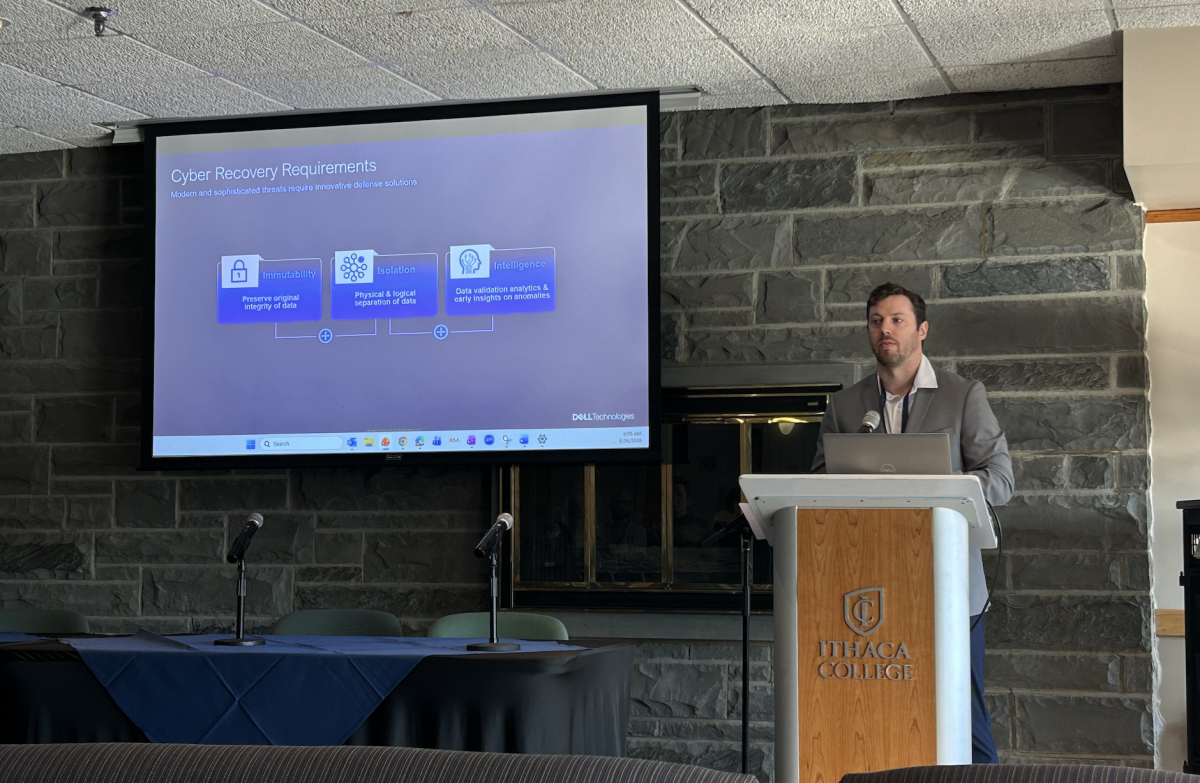
10:00 a.m. – When learning platforms go off-line in classrooms, cyberattacks and ransomware are to blame.
Disruptions in the education space occur 4,300 times per week, said Bobby Flanagan, security & resiliency account executive at Dell Technologies.
“After 2025 and aggregating all the data, education has risen as the 4th most targeted industry behind business, government and healthcare,” he said.
Between K-12 classrooms and higher education, an average of 11.6 days’ worth of server downtime adds up every year, placing administrators in comprising roles to providing maximum experiences to students.
Information technology departments, Flanagan notes, are increasingly serving more entry points of data, or pupils. Yet they are doing it with “leaners teams, fewer resources and low bandwidth,” he explained.
For software users, cyberattacks look like email phishing, erroring two-factor authentication and frozen payroll. On the back end, technology administrators’ use recoverability hard drive units and storage direct protection to protect themselves against data theft.
All schools should have data management software, he said. “You have to know what’s going on with the data to understand the who, what, when, where, why, of the attack. It the best way to recover from an attack.”
Dell, like other cyber security programs offer programs such as CyberSense, a scanning engine that uses back-up data to immediate fix corrupted files. The scanning service that schools can purchase finds the corrupt file details, changes files data, finds best recoverable copy and inserts it back into working platform for quick recovery.
“Nothing is going down in costs, especially infrastructure,” Flanagan said. But “good cyber-hygiene” is the new form of modern data protection that is a must when systems go dark.
— Story by Jake Zajkowski
Using social media for outside-of-class learning
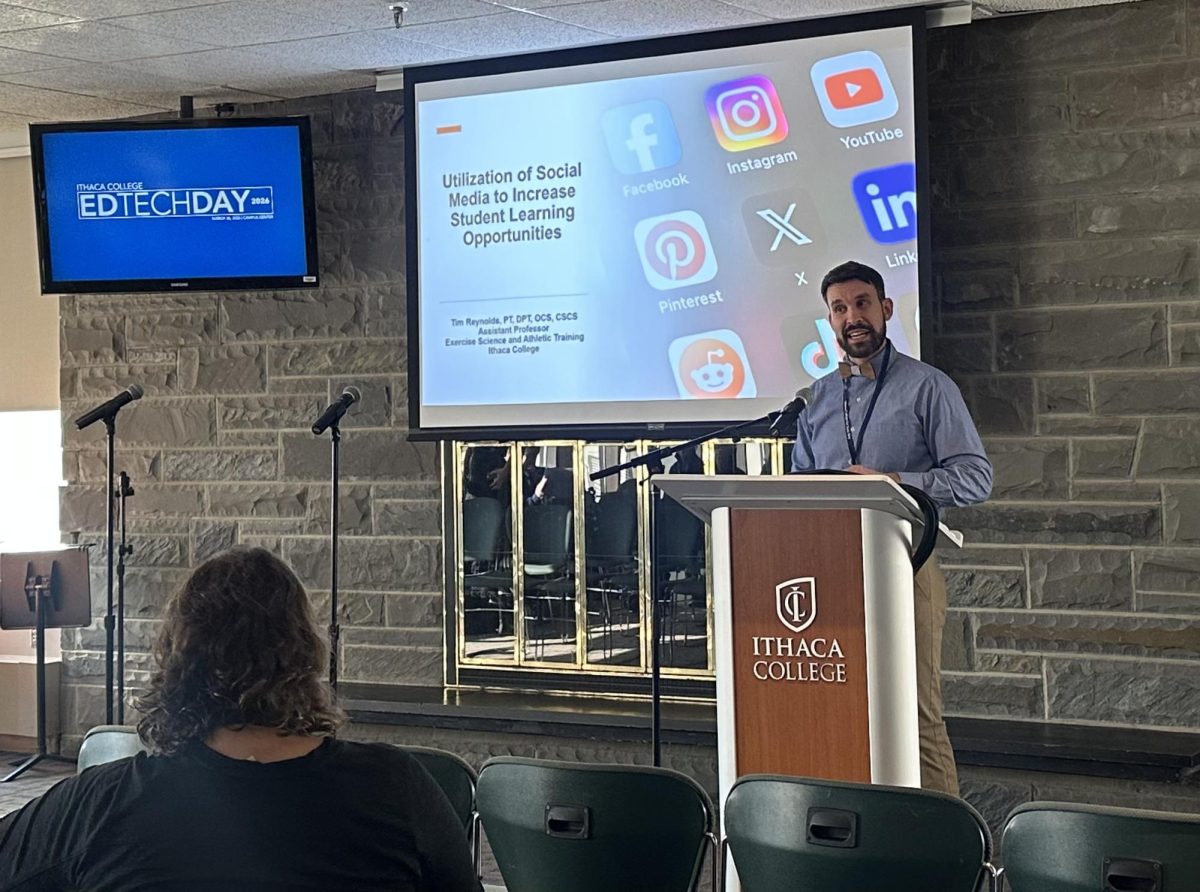
9:00 a.m. – Tim Reynolds, assistant professor and 2014 IC alum, presented this morning on the utilization of social media to enhance student learning outcomes. His background in this subject stems from his widely successful social media platforms on TikTok and Instagram, where he posts engaging teaching-based content for his students to utilize.
Reynolds refers to his social media content as extra learning opportunities, where he can post practice quizzes and short concept videos for students to review outside of class. He emphasized how this is an untapped market and a missed opportunity for professors to not utilize social media for learning opportunities, given students’ increasing attachment to being online.
“Today’s students have grown up in this generation where students have tablets in preschool and iPhones at such an early age, and yet some of us are still teaching through a textbook or teaching through PowerPoint slides,” stated Reynolds.
“It’s essentially like using a horse and buggy in today’s automobile generation,” Reynolds added.
The professor expressed his willingness to adapt his teaching methods to aid in students’ success. He discussed how every student’s preferred learning strategy is different, and one of his main focuses as an educator is making sure students have the resources they need to succeed in his classes.
“We don’t need to completely divert our teaching strategies towards a social media model, but why wouldn’t we try to increase it and provide good quality content for our students to be engaged with in a platform that they’re already spending upwards of two to four hours in a day on?” Reynolds said.
Speaking to academics and students, Reynolds stated his main piece of advice is to have vulnerability and a willingness to step outside of your comfort zone. In 2022, he never imagined having the platform he does today, but he shared how grateful he is to be able to help students learn in a way that works best for them.
— Story by Ally Mahoney